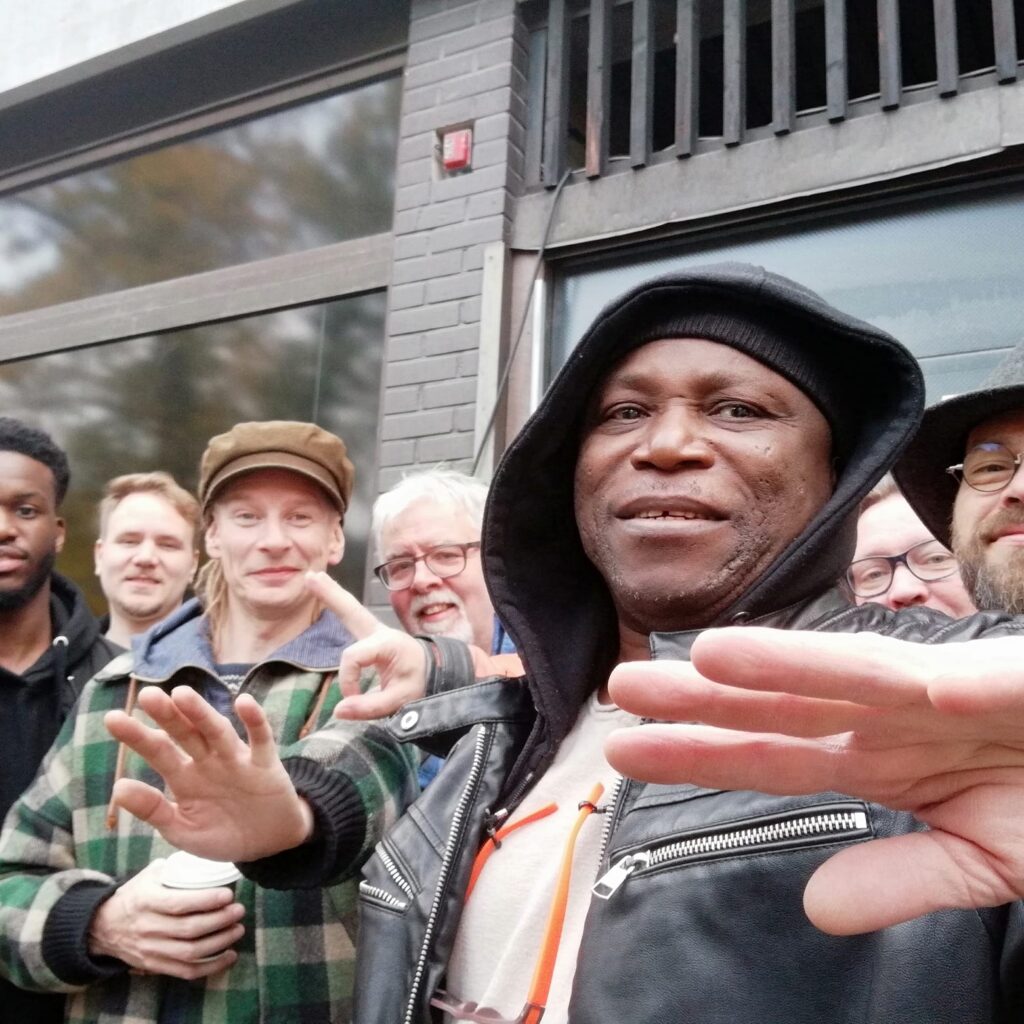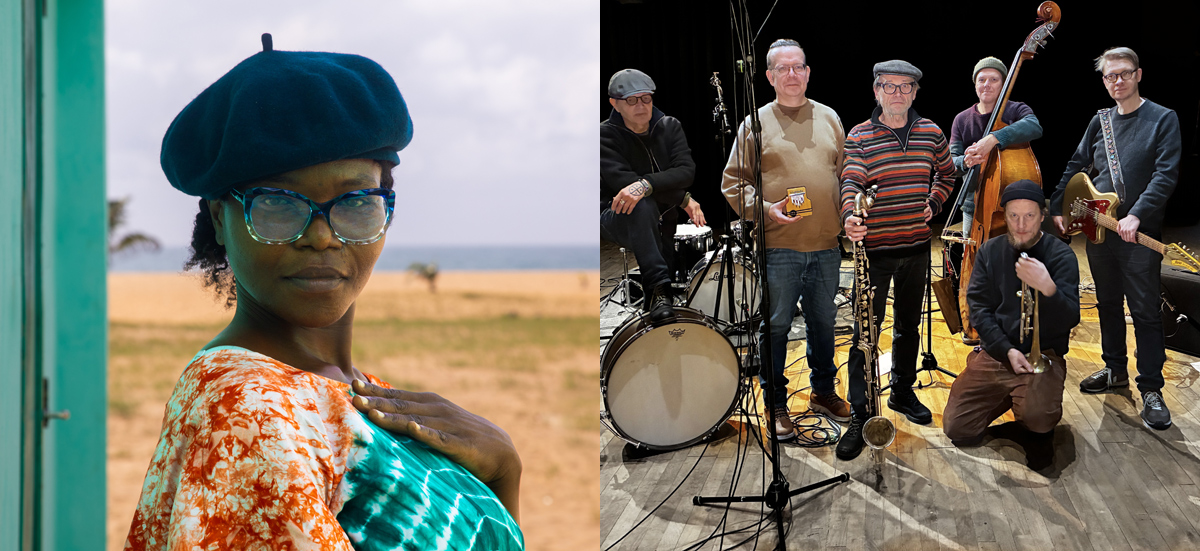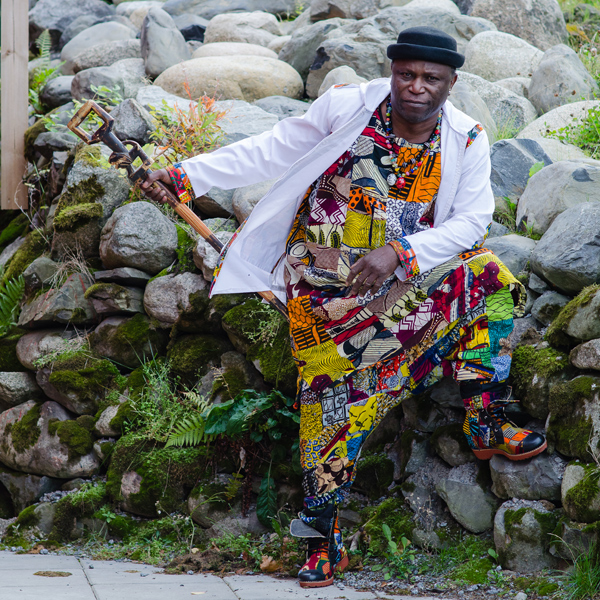
The grand old man of Afro fusion and Afro jazz in Finland, Ismaila Sané (Badiane), has truly made an exceptional and impressive international musical career over the course of his life. It dates all the way back to 1974 in Dakar, Senegal, where he was working as a percussionist and solo dancer with Ballets Bougarabou. Saïsba is his band as well as pride and joy, founded in the early 2010’s (and first witnessed live at Elephantasy – Funky Family Picnic in 2012). It is actually even named after his birth name (Sa = Sané, ïs = Ismaila, ba = Badiane).
Saïsba’s fusion of Afro jazz, Afro funk/rock and Latin influences draws from the Afrobeat tradition, yet takes it into a broader and more eclectic territory, where West African roots meet the many colours of contemporary Finnish and international music. It is still rooted in the traditional, free-form based West African approach to music and in the high level of musicianship that forms the blueprint for both recordings and live shows. Over the years, this talent has been brought to the band by many high-profile Finnish musicians. For example, on their debut album Ekiinafrik (2019) you can dive into the saxophone sounds of Sakari Kukko (Galaxy, Sakari Kukko GMS), who was even a member of Youssou N’Dour’s band Etoile du Dakar in the 1980s, as well as the vocals of the acclaimed contemporary joik singer Wimme Saari, or the guitar work of Finnish legend Jukka Orma (Sielun Veljet). You simply can’t overlook this in the history of Finnish music.
By then, Ismaila Sané had already established himself as one of the key members of two internationally celebrated musical groups from Finland. He joined Piirpauke, famous for its fusion of numerous influences from around the world, in 1989 after meeting the band leader Sakari Kukko in Tenerife. With the band, he toured regularly, especially in German-speaking countries of Central Europe, sharing stages familiar to artists like Miles Davis, Astor Piazzola, Ravi Shankar and Nirvana. They were also the first Finnish act ever to perform at the legendary MIDEM (Marché International du Disque et de l’Édition Musicale) in Cannes, France in 1995.
In the following years, Sané also joined Galaxy, which played Senegalese mbalax music and were considered part of the international Afro-pop elite in the 1990s and the first decade of the new millennium. The band released two praised albums Nobeel (1997) and L’Insécurité (2003). They also toured and performed at major events, such as Roskilde Festival in Denmark, Urkult Festival and Tune In event in Sweden and Oslo World Music Festival in Norway. Galaxy was awarded the Finland Prize awarded by the Ministry of Education and Culture in 2005.
In 2023, Sané received the Intersection Award at the Finnish Long Live Folk! Gala. He was also nominated for Artist of the Year at the 2017 Etno Gala. Because of Sané’s background as a dancer, educator and choreographer, Saïsba’s music could often be described as catchy and uplifting, while its diversity makes it much more than music solely for the dance floor. The long-awaited sophomore album is scheduled for release in 2027 on Eclipse Music, bringing them back to the forefront of Afro fusion and specifically a sound that has emerged over decades from Finland’s cultural diversity.
The core of Saïsba’s diverse lineup, still today adaptable when needed, consists of seven people on stage, with Ismaila Sané on percussion and lead vocals and backed by Sophie Vastamaa, who is also enjoying promising solo success as the Afrobeats artist Sofy Kap (check out her music video »). The experienced musicians (with potential replacements when needed) include Ari Hossi (Piirpauke) on bass, El Hadj Libass Sall (Galaxy) on electric guitar, and jazz pianist Tamás Martinec on keyboards, all honoring the legacy of Sané’s musical career. Saxophonist Kuisma Tossavainen and drummer Zouhair Amkas typically complete the lineup.
In the extended lineup of nine (or more) musicians they often boost the sound with guitarist Matti Salo (Galaxy, Hannibal & Hot Heros), jazz trombonist Andre Mena or perhaps Kari Ikonen, one of the key figures in European jazz & improvised music scene, on keyboards and Moog. Just to name a few options.
He also has a five-piece Saïsba lineup in Senegal. With his background in the scene, Ismaila knows everyone and has already played with countless musicians. That’s why his musical legacy and family are also such a lovely foundation for Saïsba.
Text: Joonas Kervinen / Funky Finland